The Manifesto
Something doesn’t add up.
You saw the evidence. This is the investigation that followed.
Welcome
You’ve seen the first evidence.
Rising investment. Results that haven’t followed. Educators stretched thin. Students increasingly absent.
Those numbers matter.
But they weren’t the discovery.
They made us start asking a different question:
How can so many committed people work so hard—and still find themselves confronting the same problems?
We began looking beneath the numbers. Beneath programs, initiatives, structures, and explanations that often sound entirely reasonable.
That’s where we found the Polite Fictions.
Nine stories public schools can tell themselves—not because people don’t care, but because the stories are reasonable enough to keep familiar patterns in place.
That’s where this investigation really begins.
Exhibit One
Exhibit One
The Polite Fictions
Nine reasonable-sounding stories that can keep schools comfortable with conditions they genuinely want to change.
Begin the investigation →Then follow the investigation
Exhibit Two
Why We Investigated
The moment the frustrations stopped looking isolated and started demanding an answer.

Exhibit Three
How the Investigation Narrowed
From 108 districts to three schools we could study closely.
Exhibit Four
Why It Works
The research beneath the practices that kept appearing in every improving school.

Exhibit Five
What We Heard
The people who did the work, describing it in their own words.

Exhibit Six
One Last Thought
What remains after the evidence has been laid out.
Before you decide
The investigation is finished. What remains is not a conclusion but a choice — where you sit, and what you are willing to look at in your own building. Take the next step at the pace that fits you.
Four seats. One conversation.
Choose your seat.
You know public schools from where you sit.
Start there.
Before you choose, hear from the other seats.
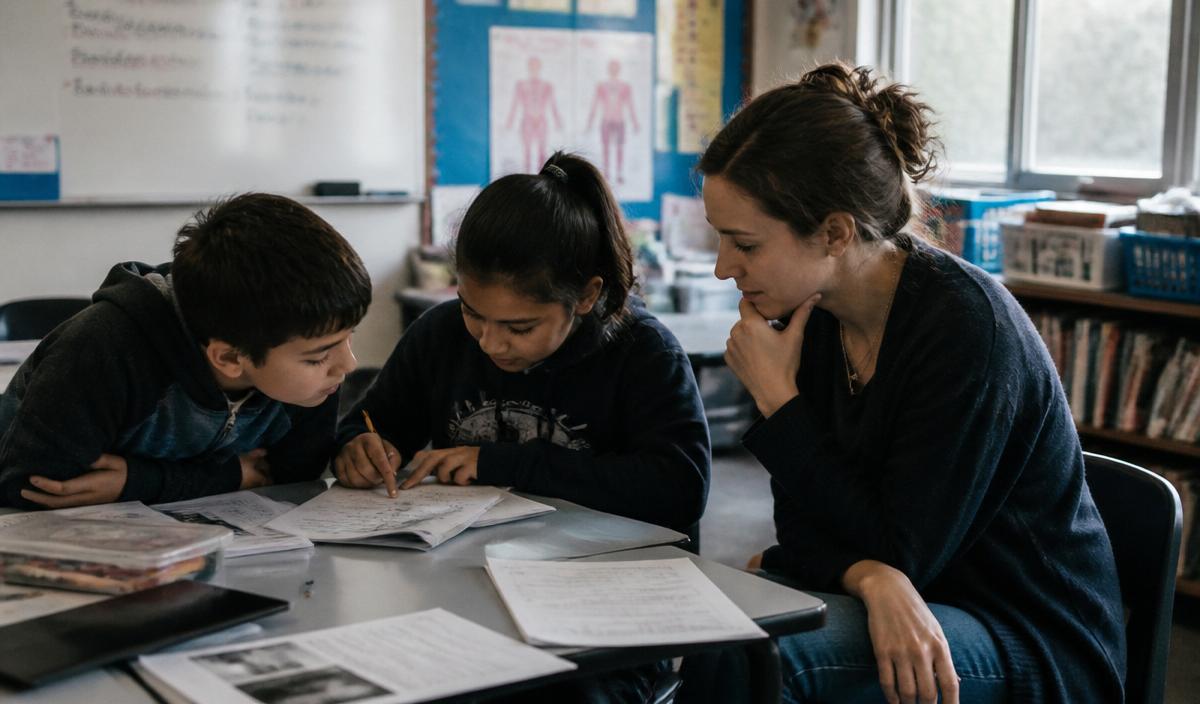
Teacher & Coach
You carry the daily work of turning expectations into learning.
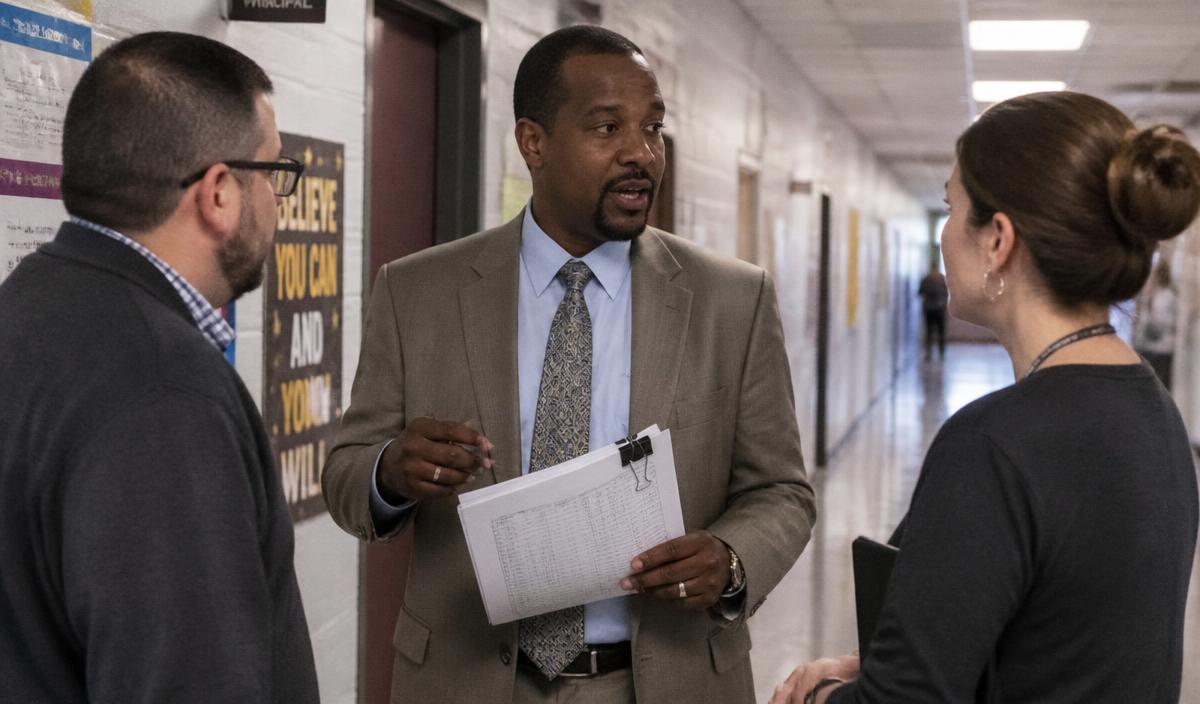
Building & District Leader
You carry decisions, priorities, people, and problems that rarely fit inside the calendar.
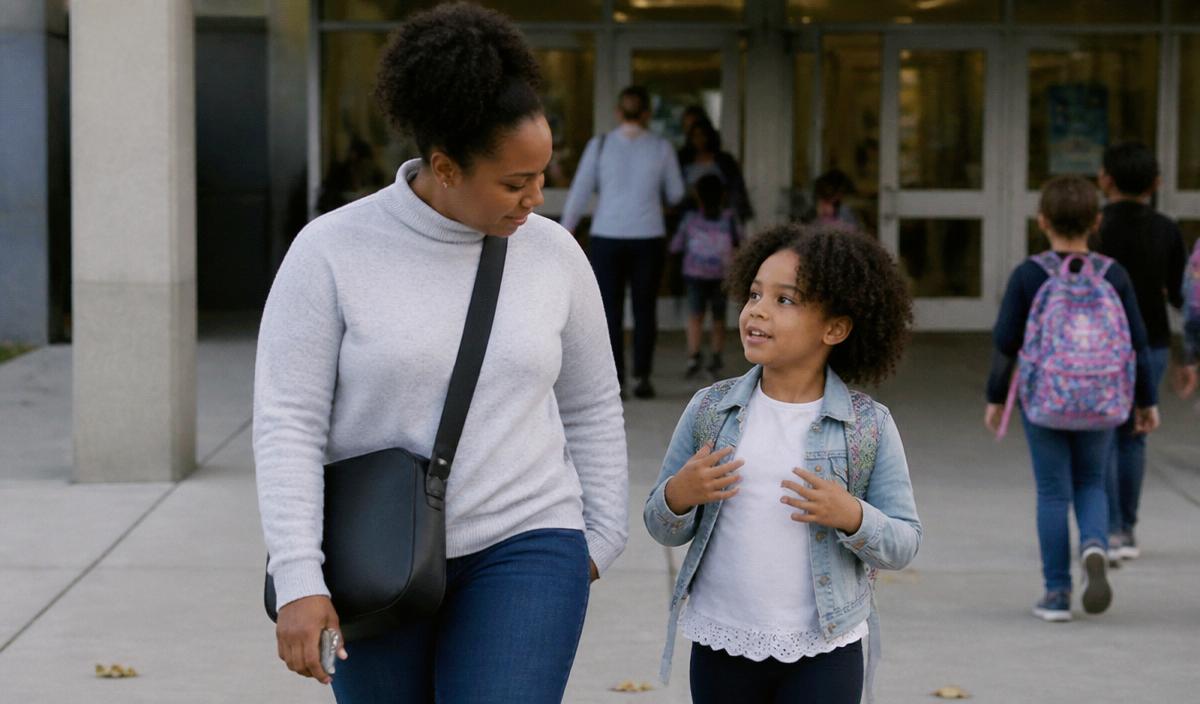
Parent & Community
You experience school through the life, learning, and well-being of a child.
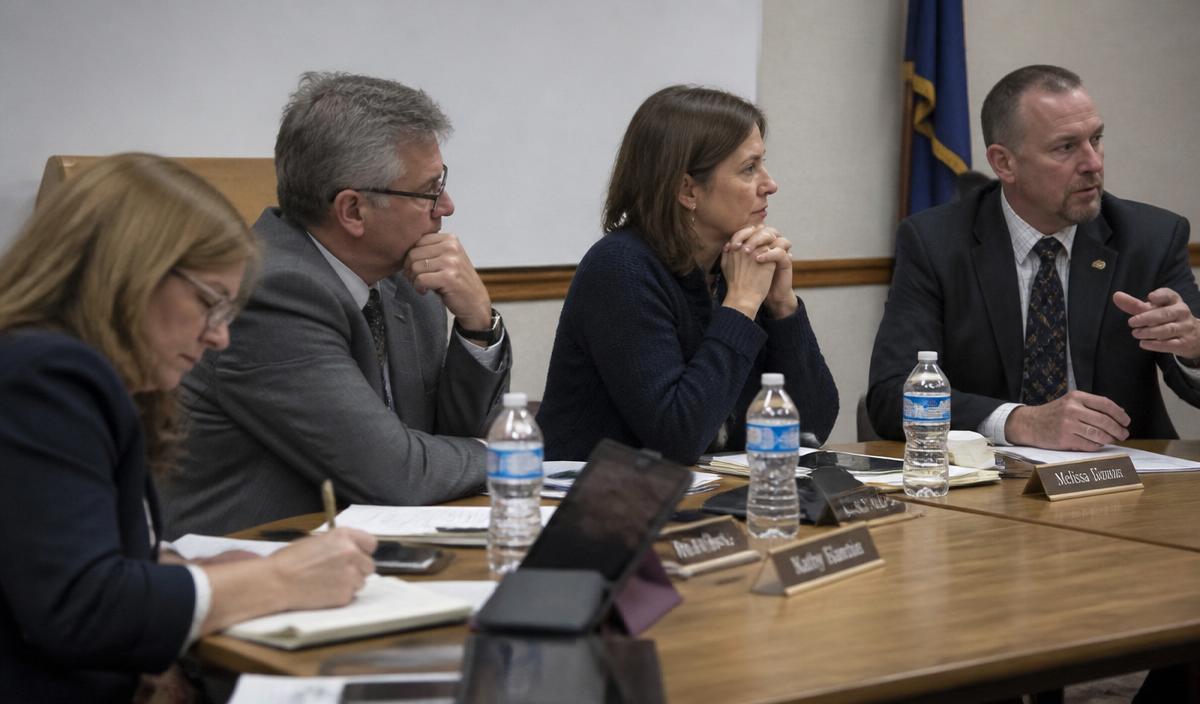
Board Member & Community
You help shape the priorities, resources, and conditions that eventually reach classrooms.
Already walked a seat?
Continue the Investigation
You’ve experienced the museum’s curated interpretation of the Public School Manifesto. Choose where you’d like to go next.
The Evidence Wing
The archive. Every investigation, every research finding, every witness statement — examined at your own pace.
Enter the archiveDiscover Your School’s Story
Nine quick signals to consider what is happening where you are — and one conversation worth having.
Take the checkThe Complete Public School Manifesto
Every chapter, extended research, complete case studies, source notes and references — the permanent record.
Download the PDFThe permanent record
Continue Beyond the Museum
You've experienced the curated exhibition. For the complete work — including every chapter, extended commentary, references, and supporting materials — download The Complete Public School Manifesto.
The full Manifesto contains
- Every chapter
- Extended research
- Complete case studies
- Source notes
- References
About the authors
Built through decades of district leadership, superintendent experience, and hands-on use of Professor John Hattie’s Visible Learning research in schools.

Dave Nagel
Co-Author & Consultant

Bruce Potter
Co-Author & Retired Superintendent
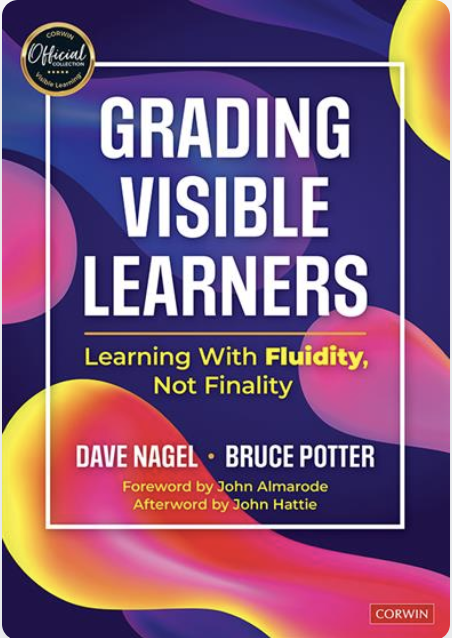
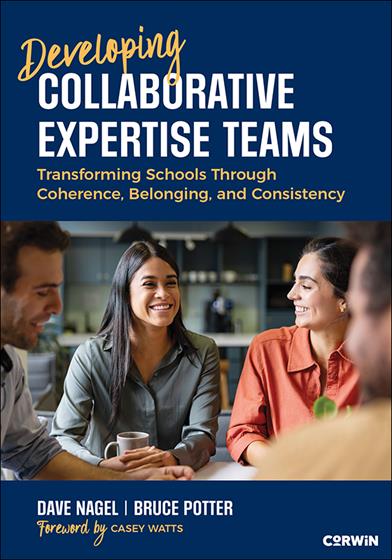
Co-authors of Grading Visible Learners (Corwin, 2025) and Developing Collaborative Expertise Teams (Corwin, 2026).
References
Master references ledger
- [1]TNTP. (2024). The Opportunity Makers: How a diverse group of public schools helps students catch up — and how far more can. TNTP.
- [2]Nagel, D., & Potter, B. (2026). Developing Collaborative Expertise Teams: Transforming Schools Through Coherence, Belonging, and Consistency. Corwin Press.
- [3]TNTP. (2018). The Opportunity Myth: What students can show us about how school is letting them down — and how to fix it. TNTP.
- [4]Hattie, J. (2023). Visible Learning: The Sequel — A synthesis of over 2,100 meta-analyses relating to achievement. Routledge.
- [5]The Education Trust. (2020). The steep cost of missed opportunities: How the opportunity gap is failing our students.
- [6]Moldt, S. R. (2016). Making the Grade: A ground-level analysis of New York State's teacher performance review under the APPR. BYU Education & Law Journal, 2016(2), 217–261.
- [7]Center for Education Policy Research (Harvard University), Educational Opportunity Project (Stanford University), & Dartmouth College. (May 2026). The Education Scorecard.
- [8]Cavanagh, S. (2003). Stanford University research study on the disconnect between high school coursework alignment and college standardized test expectations.
- [9]Najarro, I. (2024a). Discrepancies and inconsistencies in K-12 report card marks versus state benchmarks and Advanced Placement exam outcomes.
- [10]Najarro, I. (2024b). The growing structural mismatch between student classroom grades and scores on national standardized assessments (SAT/ACT).
- [11]Nagel, D., & Potter, B. (2025). Grading Visible Learners: Learning With Fluidity Not Finality. Corwin Press.
- [12]Hattie, J. (2015). What Works Best in Education: The Politics of Collaborative Expertise. London: Pearson (Open Ideas at Pearson).
- [13]Sartain, L., & Morris, W. T. (2024). Are Teachers Satisfied With Their Evaluations? The Importance of Teaching Context and Trends Over Time. AERA Open, 10(1), 1–16. https://doi.org/10.1177/23328584231221539
- [14]Office of Education Policy. (2024, June). Effects of PLC at Work in Arkansas on student academic outcomes (Volume 21, Issue 1). University of Arkansas.
- [15]Marken, S., & Agrawal, S. (2022, June 13). K-12 Workers Have Highest Burnout Rate in U.S. Gallup.
- [16]Learning Policy Institute. (2025, July 16). An Overview of Teacher Shortages: 2025 [Fact Sheet].
- [17]Grissom, J. A., Loeb, S., & Master, B. (2013). Effective Instructional Time Use for School Leaders: Longitudinal Evidence from Observations of Principals. Educational Researcher, 42(8), 433-444.
- [18]National Center for Education Statistics. (2022). Average hours per week that public K–12 school principals spent on all school-related activities and percentage of time spent on various tasks: 2020–21. U.S. Department of Education.
- [19]Hollister, R., & Watkins, M. D. (2018, September–October). Too Many Projects: How to deal with initiative overload. Harvard Business Review.
- [20]Hattie, J., & Timperley, H. (2007). The Power of Feedback. Review of Educational Research, 77(1), 81–112.
- [21]Wiliam, D. (2011). Embedded Formative Assessment. Solution Tree Press.
- [22]Fullan, M., & Quinn, J. (2016). Coherence: The Right Drivers in Action for Schools, Districts, and Systems. Corwin Press.
- [23]Timperley, H., Wilson, A., Barrar, H., & Fung, I. (2007). Teacher Professional Learning and Development: Best Evidence Synthesis Iteration. New Zealand Ministry of Education.
- [24]Hattie, J. (2009). Visible Learning: A Synthesis of Over 800 Meta-Analyses Relating to Achievement. Routledge; and Hattie, J. (2012). Visible Learning for Teachers. Routledge.